The short version
- Tesla motors and high-voltage batteries are very reliable — they fail far less than petrol engines and gearboxes.
- The real issues in the Australian used market are the heat pump/air-con, front control arm clunk, seat foam wear and tyre wear.
- Battery state of health (SOH) matters most — and is invisible without a proper test.
- Our EV Battery Health Inspection includes an AVILOO-certified battery test.
Teslas have an excellent powertrain reliability record — electric motors and the high-voltage battery genuinely fail far less often than the engines and transmissions in equivalent petrol cars. But that doesn't make a used Tesla risk-free. In the Australian market we repeatedly find the same handful of issues, and most of them have nothing to do with the motor. Below are the faults we see most, with real inspection photos.
What we find most on used Teslas (2021+ Model 3 & Model Y)
- Front control arm clunk / squeak
- Heat pump & air-con system faults
- Sagging or worn seat foam
- Abnormal tyre wear
- Scrapes to the underside of the battery pack
- Reduced battery state of health (SOH)
- Steering assist issues
Which Tesla am I looking at?
This guide focuses on the Model 3 and Model Y — by far the most common Teslas in the Australian used market — with notes on older Model S/X where relevant.
| Model | Years (AU) | Watch for |
|---|---|---|
| Model 3 | 2019 on | Control arm clunk, heat pump (2021+), seat foam, tyre wear |
| Model Y | 2022 on | Heat pump, control arm, battery pack underside, tyre wear |
| Model S / X | 2012–2020 | Door handles, MCU/screen (yellow border, reboots), air suspension |
The most common Tesla faults we find
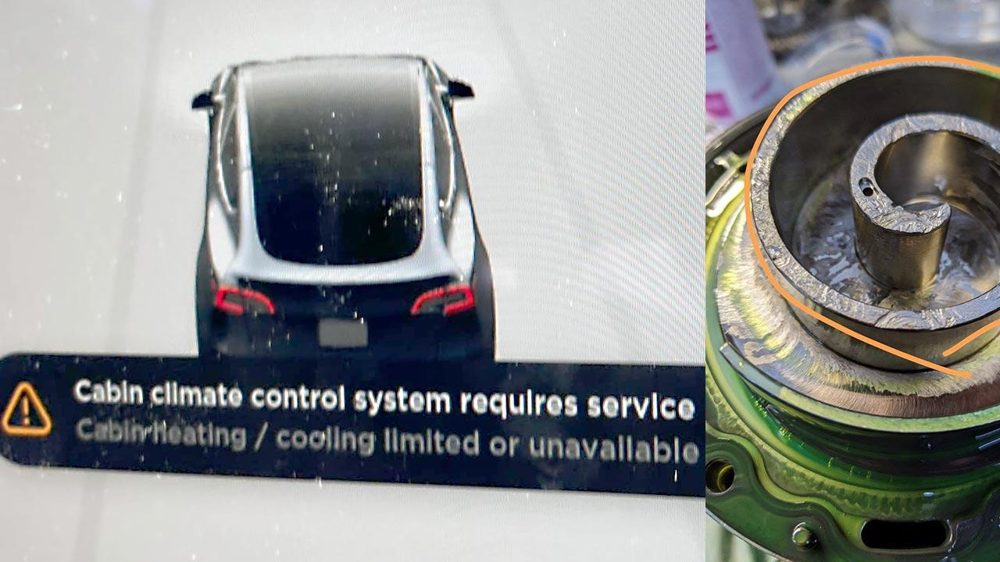
Heat pump / air-con system (Super Manifold)
- Air-con not cooling
- No heating in winter
- Abnormal battery pre-heating
- Noticeably higher energy consumption
Test heating and cooling thoroughly. Common causes are refrigerant leaks, a faulty Super Manifold valve body, or a worn compressor. Watch for any "cabin climate control" service alert.
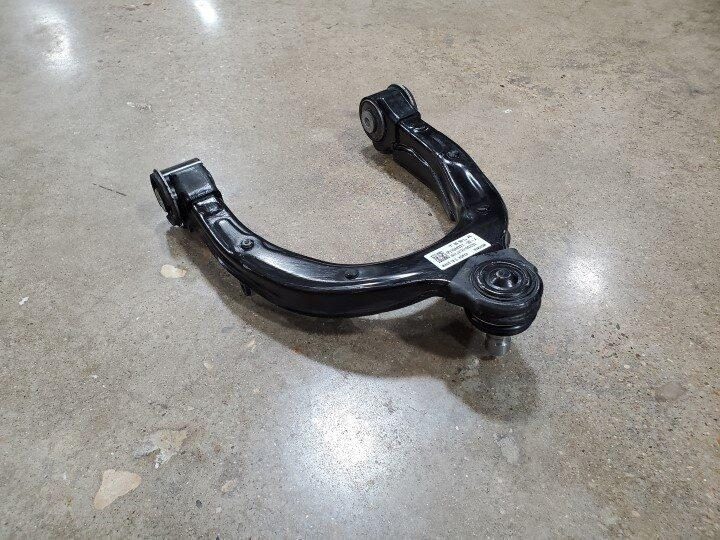
Front control arm clunk / squeak
- Squeak when turning at low speed
- Clunk over speed bumps
- More noticeable when cold
This is the single most common issue we find on Model 3/Y. Listen for squeaks turning slowly (e.g. car park manoeuvres) and clunks over bumps. Tesla has revised control arms over time, so ask whether they've been replaced.
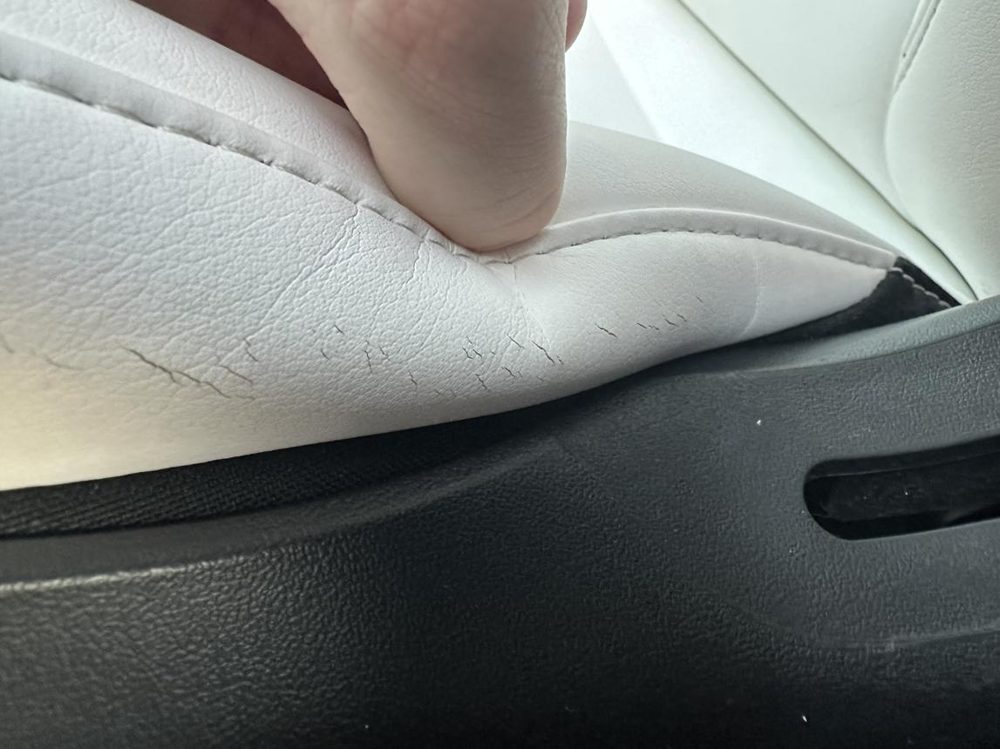
Seat foam sag & wear
- Driver's seat bolster collapsing
- Yellow foam crumbs under the seat
- Cracking on the seat surface
Look under the driver's seat for yellow foam debris, and check whether the left/outer bolster has collapsed. Common on Model 3 and high-mileage rideshare (e.g. Uber) cars.
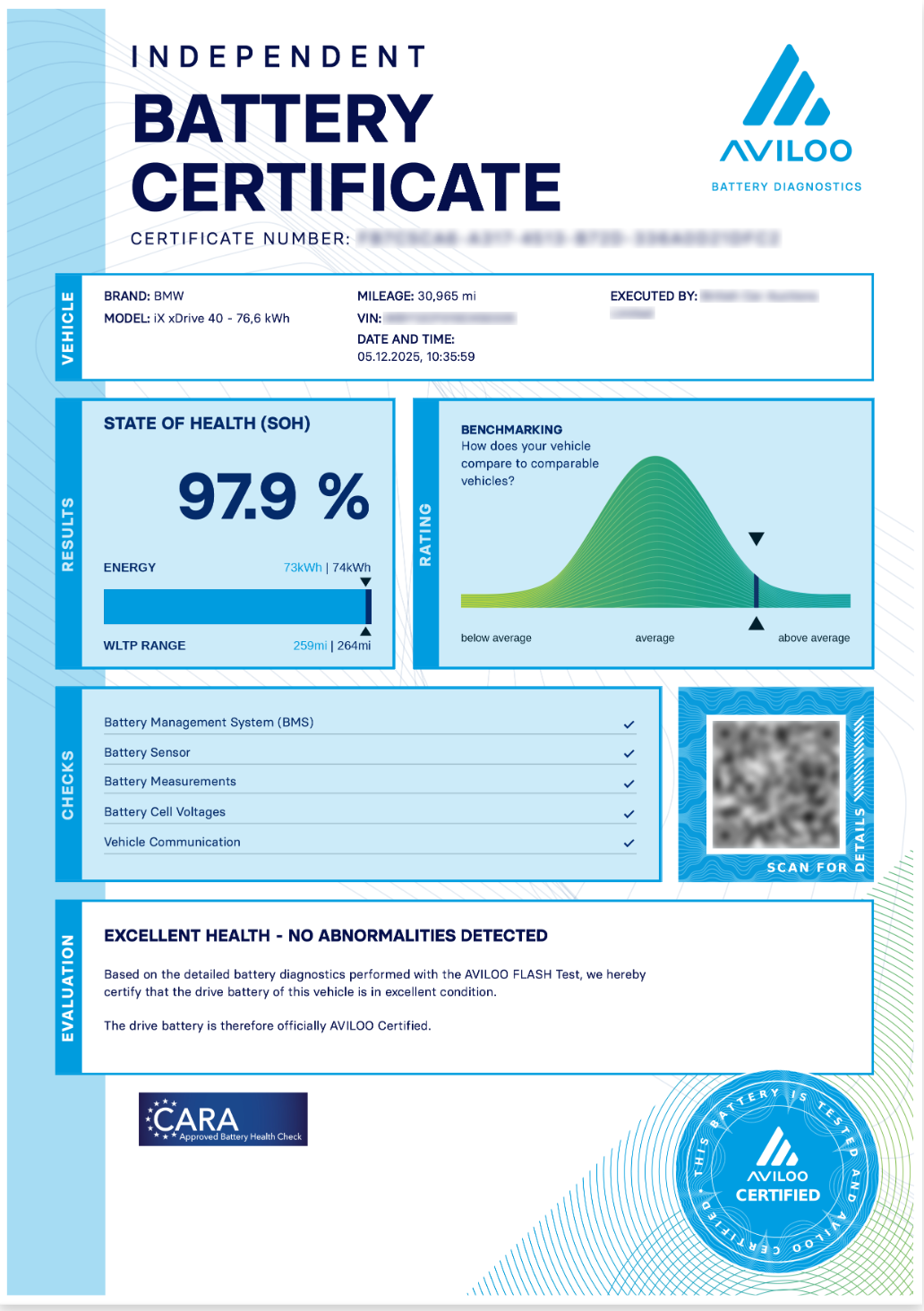
Battery degradation (state of health)
The high-voltage battery rarely fails outright, but it does gradually lose capacity. Degradation is invisible from the driver's seat and dramatically affects a used Tesla's range and value — so it's the single most important thing to verify.
| Distance | Typical degradation (guide) |
|---|---|
| 50,000 km | ~2–5% |
| 100,000 km | ~5–10% |
| 200,000 km | ~10–15% |
State of health can be assessed via Tesla Service Mode / Toolbox or an independent test such as AVILOO. An independent test is harder to game than a quick dashboard range estimate.
This is our EV inspection's core check
JPI's EV Battery Health Inspection includes an AVILOO-certified battery test, so you get an independent SOH figure — not just a dashboard guess — before you buy.
EV Battery Inspection — $384Abnormal tyre wear
- Inner-edge wear
- Rear tyres wearing quickly
- Wheel alignment out
Teslas are heavy and torquey, so tyres wear fast — many have had a set replaced by 20,000–40,000 km. Check inner-edge wear and ask about alignment history.
Steering rack / assist
- Heavy steering
- Loss of steering assist
- Notchy or sticky steering
- Occasional EPS fault
Feel for heaviness, notchiness or any momentary loss of assist when turning, and check for stored steering (EPS) fault codes.
High-voltage cooling leaks
- Coolant level dropping
- Abnormal battery temperature
- Reduced charging speed
The battery and motors are liquid-cooled. Any coolant loss, temperature warnings or reduced charging speed should be investigated — this is a key item on an EV inspection.
Charge port faults
- Won't lock the plug
- Charging won't start
- CCS not recognised
Test AC charging, DC fast charging and a Supercharger if possible — a port fault may only show up on one type.
12V low-voltage battery
- System won't power up
- "Replace battery" message
- Random fault codes
Even with a healthy high-voltage battery, a failing 12V battery can leave the car unusable. Ask when it was last replaced and look for related warnings.
MCU / screen & door handles (mainly Model S)
- Black screen, reboots, touch not responding
- Yellow border around the screen
- Door handles not presenting / won't unlock (Model S)
On older Model S/X, check the screen for the yellow-border issue, reboots and touch faults, and confirm all door handles present and unlock correctly.
What JPI checks on a Tesla
Our Tesla inspections focus on the areas that actually matter on these cars:
- Battery state of health (SOH) — AVILOO test
- Heat pump & compressor operation
- Front control arm clunk / squeak
- Steering assist & feel
- Seat foam & trim condition
- Charge port function (AC / DC / Supercharger)
- High-voltage system fault codes
- Evidence of accident repair
- Underbody & battery-pack damage
- Tyre wear & alignment
Tesla Model 3 & Model Y FAQs
The drivetrain is very reliable — motors and the high-voltage battery fail far less than petrol engines. The issues we see most are the heat pump/air-con, front control arm clunk, seat foam wear, tyre wear and battery degradation. A proper inspection focuses on these plus battery state of health.
For 2021+ Model 3 and Model Y: control arm clunk/squeak, heat pump faults, sagging seat foam, abnormal tyre wear, scrapes under the battery pack, reduced battery state of health, and occasional steering assist issues.
Battery state of health (SOH) can be assessed via Tesla's service tools or an independent test like AVILOO. As a guide, expect ~2–5% degradation by 50,000 km, ~5–10% by 100,000 km and ~10–15% by 200,000 km. Our EV Battery Health Inspection includes an AVILOO-certified test.
It depends on the fault. Minor heat pump / Super Manifold repairs are typically $500–$1,500, while a compressor replacement can be $2,000–$4,000 or more — one of the pricier Tesla items, so check heating and cooling work properly before buying.
Buying a used Tesla?
The motor's probably fine — it's the battery health, heat pump, suspension and accident history that decide whether it's a good buy. Our EV inspection covers all of it, including an AVILOO-certified battery test.
Book an EV Battery Inspection — $384